

START
- 1. Body languge in Communication.
- 2. Idea of The subject of a sentence.
- 3. Verb in a Sentence.
- 4. How to use am,is,are to describe people and things, actions, status etc. in Present time
- 5. How to use was/were to describe people and things, actions, status etc. in Past
Will be – When and how to use?
Describing status/condition of people or anything, in future
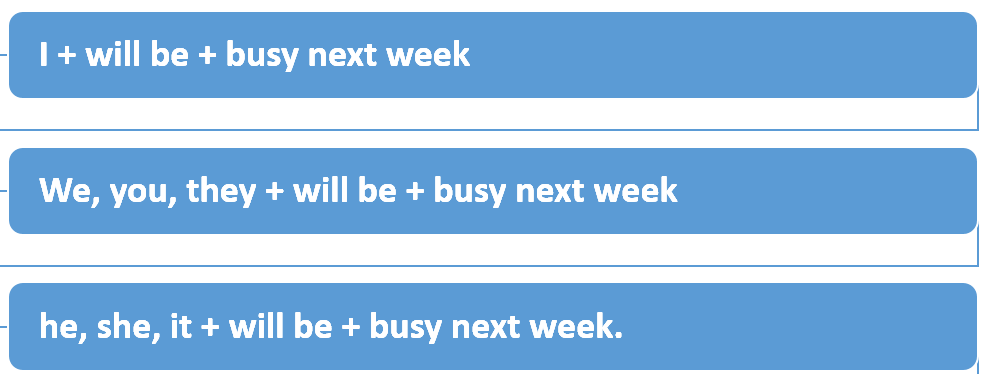
Examples:
She will be busy tomorrow (Becasue she has a function at her home)
Will she be busy tomorrow?
She won’t (=will not)be busy tomorrow.
Won’t she be busy tomorrow?
When will she be busy (Rarely used sentence)
Describing the location where people or things are like to there
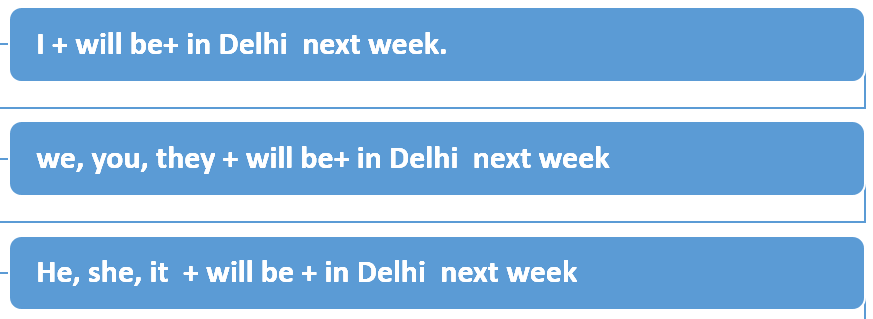
He will be in office at 10 ‘O clock tomorrow
Will he be in office at 10 ‘O clock tomorrow?
He won’t be in office at 10 O clock tomorrow = He will not be in office at 10’O clock
Won’t he be in office at 10’ O clock tomorrow?When will he be in office today
Describing an action that will go on continuously in a specified time in future
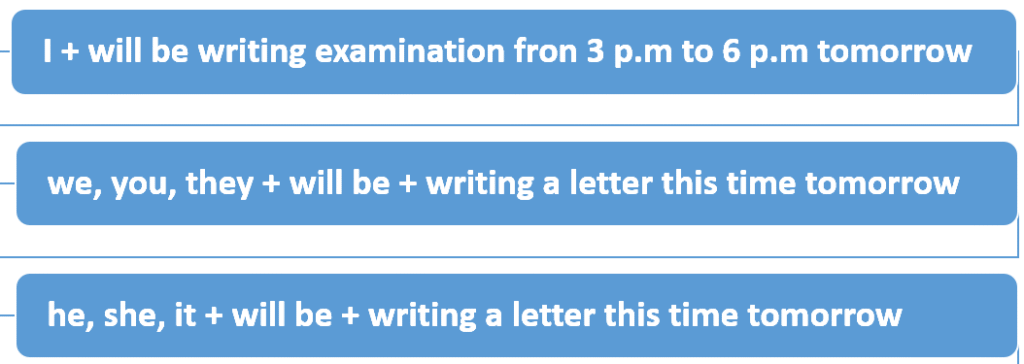
Examples:
He will be travelling in train from 5 p.m. to 8 p.m. tomorrow.
I will be learning English skills this time tomorrow.
My son will be studying in school from 10 a.m. to 1 p.m. tomorrow
NOTE: Shall be can be used only with ‘i’ and ‘we’
Module 5c – Making sentences with was,were– Describing continuous actions in the past
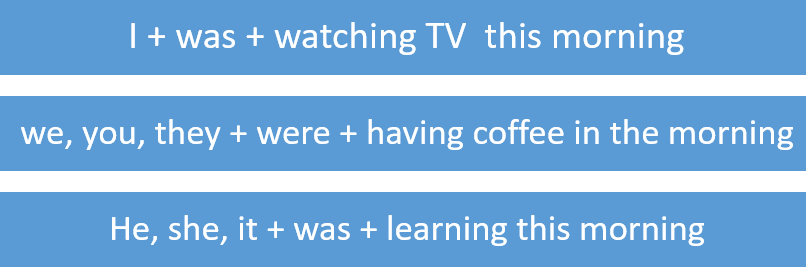
She was travelling on a train at this time yesterday
I was watching a TV programme from 5 to 6 p.m. yesterday
She was cooking in the kitchen today morning.
Module 5B – Making sentences with was,were– Describing the status of people or things
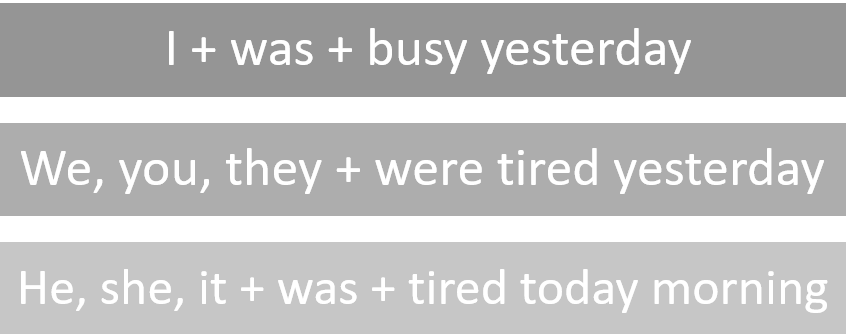
She was busy in the morning
Was she busy in the morning?
she wasn’t (=was not) busy in the morning
Wsn’t she busy in the morning?
How was she in the morning?
They were very tired yesterday
I was Exhausted after finishing my home work
He was at happy (When he met his uncle last night)
Module 5A- Making sentences with was,were– Describing location in past time
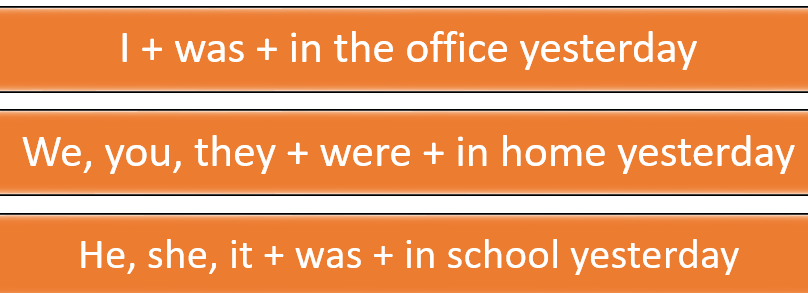
They were in office yesterday
Were they in office yesterday?
They weren’t in office yesterday.
Weren’t they in office yesterday?
Where were they yesterday?
Who was in the office yesterday? The subject ‘who’ is singular.
Who was in the office yesterday? The subject ‘who’ is Plural = refers to many people
Module 5 – Making sentences with was,were– Describing people and Things in past time
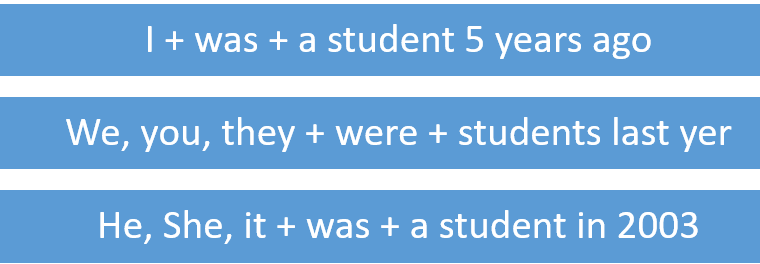
She was student in 2021 now she is a teacher.
I was in France last week
She was sick yesterday.
Was she sick yeterday?
She wasn’t (= was not) sick yesterday.
Wasn’t she sick yesterday?
How was she yesterday? (Open ended question)
Module 4 – Making sentences with am, is, are – Describing people and Things
Let’s start making sentences with the being verbs am, is, are – To describe people, places and things (Physical/virtual)
Now let’s pair the verbs, am, is ,are with the appropriate subjects or their pronouns
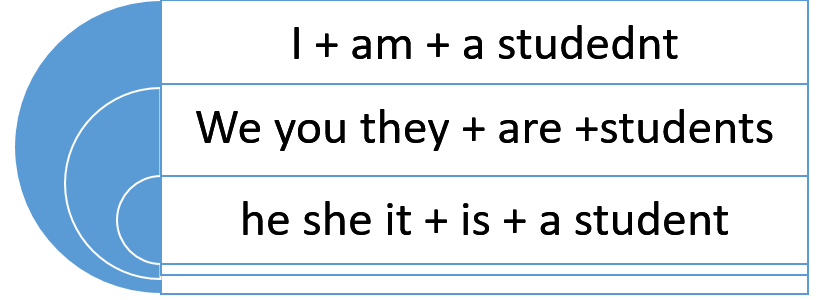
NOTE: ‘S” is added to plural nouns (people, places or things)
I am a teacher.
I am Jack from Oxford.
Weather is very hot = it is hot.
My father is a bank Manage = He is a manager.
Rane is my friend = she is a manager.
I am in Chennai I am at my friend’s.
Trunp is the president of America.
Alaska is a part of Aamrica.
Oxford is a famous university.
Practice: Speak the above sentences in different moods and tones and see how the context changes
Now let’s see how gramatically we can change the context/meaning of the above sentences (turning them into a questions, negatives etc.
- Shane is a manager (Describing Who/what the subject = Shane is ) – A simple sentence
2. Is shane a manager? (“yes/no‘ question) – this question requires answer, either ‘yes’ of ‘no’
3. Shane isn’t a manager? – she is something else (|Negative sentence)
4. Isn’t shanti a manager? (I have a doubt or i need a clarification ) – Negative ‘yes/no’ question
5. What is shane? (I want ful detail about Shane) – ‘Wh’ question (This question needs full answer aboout the subject =Shane)
Practice: speak the above five types of senences in different tones and moods (Wihout changing the word order) You can generate dozens of contexts by speaking them in different moods. for example First sentence can be converted into a ‘yes’ or ‘no’ question a jobke, an angry statement or a doubt.
am, is, are + location
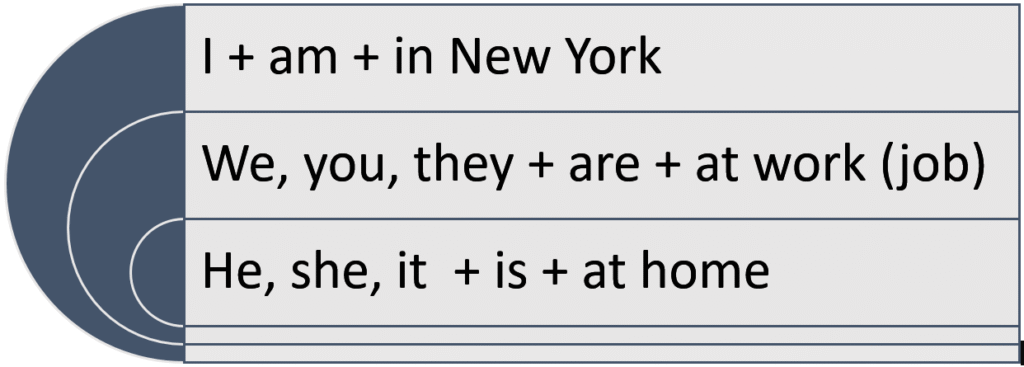
I am at Grocer’s
She is in office
Is she in office?
She isn’t in office
Isn’t she in office?
Where is she?
Is your brother in bank?
He isn’t in bank he is at work.
Am is are – To express Status of people or things
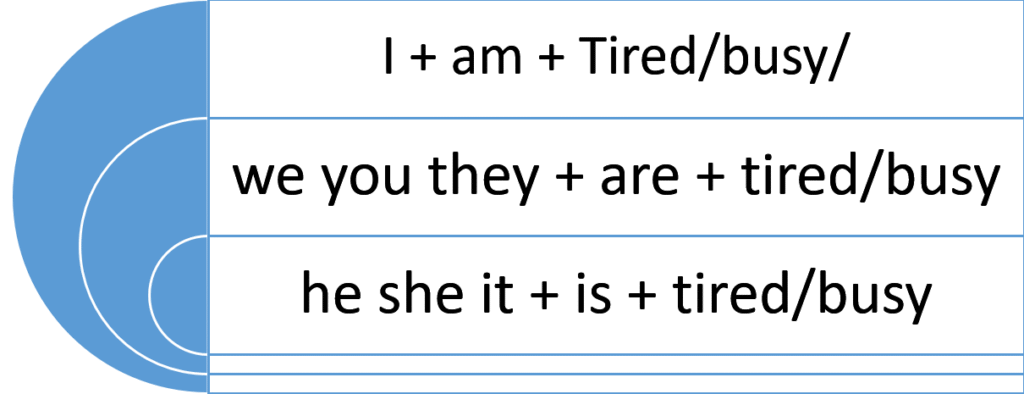
Examples:
I am Tired
She is busy
They are hungry
I am exhausted, Please give me something to drink
She is disappointed with her new recruit.
Am, is are + action verb like Writing, eating, watching etc. – An action that goes on at the time of speaking like: She is Watching a TV programme. or An action that may not be going on at the time of speaking like : Clara is working in a bank (She is not working for 24 yours)
NOTE: Always use verbs with ‘ing’form (Present participle verb forms) with Am,is,are for example: drinking, singing, working etc. (I am drink, she is watch, they are eat are the wrong sentences)
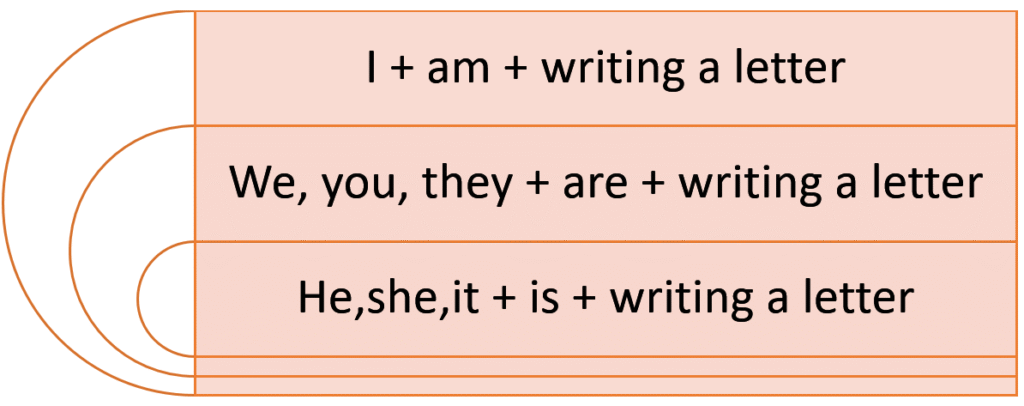
She is doing laundry
Is she doing laundry?
She isn’t doing laundry
Isn’t she dong laundry?
What is she doing?
More sentences with am, is, are
Are you watching TV?
Are you reading or not?
The Kid is holding a knife, take it off immediately.
Water is flowing, close the tap soon
Nobody is in the room, why is the fan running?
Lights is burning, switch it off
Someone is knocking the door, please open it.
Actions that aren’t taking place at the time of speaking
I am learning spoken English
I am working in Wipro.
Actions that are planned
I am visiting My Hometown next week.
My uncle is coming to my home tomorrow morning.
More examples – Advance
The Climate is changing very fast.
We are beginning to feel comfortable in English class.
She is starting to feel happy in her new school.
My kids are growing fast.
His muscles are becoming stronger, after 3 months of exercise.
The prices of cars are increasing.
The cost of petrol is falling slowly.
The World is changing fast.
My grandfather is always forgetting things
Module 3: Verbs in English
“If you know how to handle verbs, you know how to handle the language. Everything else is just vocabulary.”
1. What is a Verb?
A verb is the most important word in a sentence.
It tells us what happens, what someone is, or what someone feels.
2. Types of Verbs
a) Action Verbs
These verbs show action.
- Examples: run, eat, write, play
- They can be in:
- Present: She writes
- Past: She wrote
- Future: She will write
b) Being Verbs
These verbs show state or condition.
- Examples: is, am, are, was, were
- Used to describe:
- Status: She is a teacher
- Location: He is in class
- Time/condition: It is late
c) Modal Verbs
These verbs help express ability, permission, possibility, or advice.
- Examples: can, may, must, should
- (Covered in a separate lesson)
3. Main Verb & Helping Verb
Sometimes a verb needs help.
Examples:
- Shane is a student
→ is = main verb - Shane is reading a newspaper
→ is = helping verb
→ reading = main verb - What do you do for a living?
→ First do = helping verb
→ Second do = main verb
NOTE: The Helping verb the main verb to turn a sentence into a negative, interrogative etc.
4. Subject–Verb Agreement
The subject and verb must match.
❌ She are a teacher
✔ She is a teacher
❌ I reads the newspaper
✔ I read the newspaper
5. Smart Tip: Use Pronouns
We talk about many subjects daily:
(weather, education, friends, travel, etc.)
To choose the correct verb:
👉 Convert the subject into a pronoun mentally.
- The teacher → She → She is
- My friends → They → They are
This trick helps you quickly choose the correct verb.
6. Practice
A. Identify the Verb Type
- She is happy → __________
- They are playing → __________
- He can swim → __________
B. Correct the Sentence
- She are my friend → __________
- I goes to school → __________
C. Fill in the Blank
- He ___ (is/are) a doctor
- They ___ (is/are) students
- She ___ (read/reads) daily
7. Summary
- Verbs are the heart of a sentence
- Types: Action, Being, Modal
- Use helping verbs when needed
- Always follow subject–verb agreement
- Use the pronoun trick for accuracy
Subject to Subject Pronoun or just Pronoun – conversion
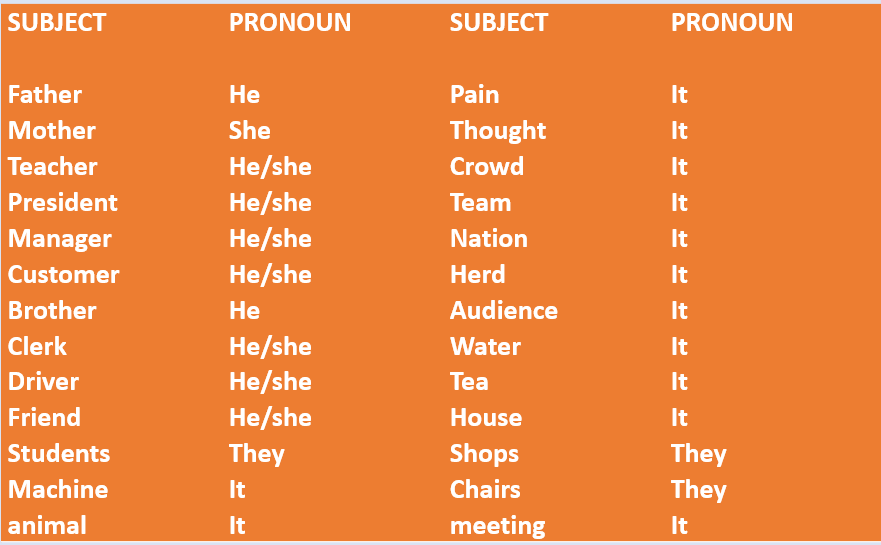
Sbject-pronoun Table 1 (In white refers to the subject of everything that exists under the sun) This table is going be the most important base for sentences construction in English languge. During the sentences construction we may be using the subjects directly e.g. Jack, Shane, The UK, dog, The New York or their equivalent pronoun like he,she, it, etc.
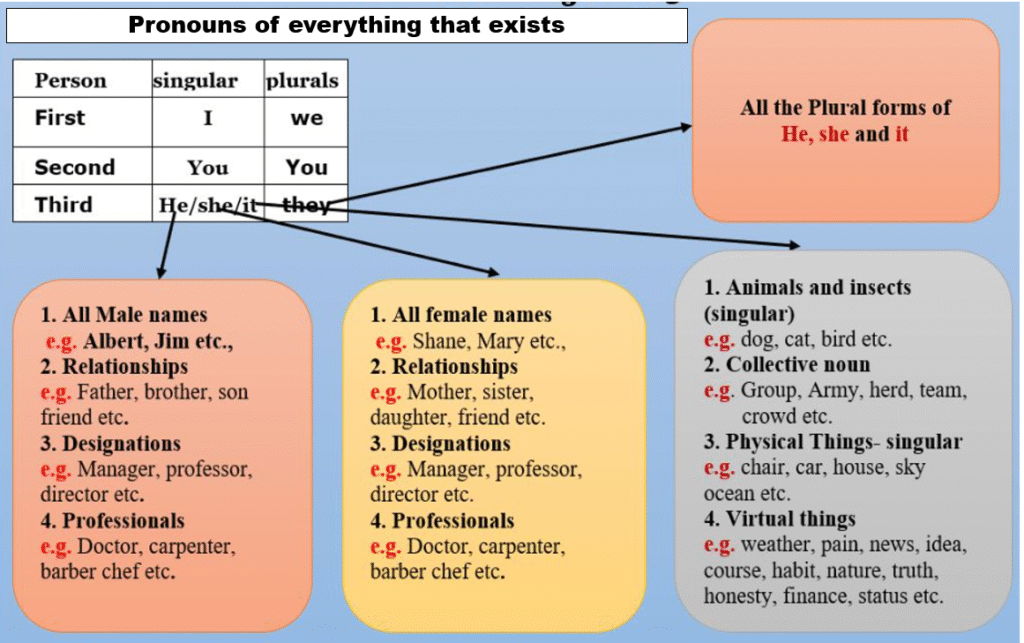
Module 2: Understanding the Subject of a Sentence
Lesson Objective
By the end of this lesson, you will:
- Understand what a subject is
- Identify the subject in simple sentences
- Use subjects correctly while speaking
What is a Subject?
A subject tells us who or what the sentence is about.
In this lesson, a subject can be:
- A person 👨
- A place 🏙️
- A thing 📘
- An idea or concept 💭 (even something not physical)
Types of Subjects
1. Single-word Subject
A subject can be just one word:
- I am happy.
- She is a singer.
“I” and “She” are the subjects.
2. Group of Words as Subject
A subject can also be a group of words:
- The President of India is speaking.
“The President of India” is the subject.
Position of Subject in a Sentence
1. Subject at the Beginning (Most Common)
👉 In most English sentences, the subject comes first.
Examples:
- Stars are far away.
- She is a singer.
2. Subject is Hidden (Not Written)
Sometimes, the subject is not written—but we understand it.
Examples:
- Sit quietly. → (You sit quietly)
- Don’t move from here. → (You don’t move)
Here, the hidden subject is “you”
3. Subject in the Middle or End
Sometimes, the subject comes later in the sentence.
Example:
- May God bless you.
“God” is the subject.
Activity 1: Find the Subject
Identify the subject in these sentences:
- The sun is bright.
- She plays the piano.
- Sit down.
- May you succeed.
Activity 2: Make Your Own Sentences
Create 3 sentences and check with ChatGPT
- One with a single-word subject
- One with a group subject
- One with a hidden subject
Takeaway
✔ Every sentence has a subject
✔ The subject tells us who or what
✔ It is usually at the beginning, but not always
✔ Sometimes, it is hidden (you)
Additional Information about the ‘Subject in a sentence’
Module 1 – Role of Body Language in Communication
Speak Without Fear – The Power of Communication
Module Objective
By the end of this module, learners will:
- Understand that communication is more than words
- Use body language and tone effectively
- Gain confidence in speaking basic English sentences
- Realize they already have a strong foundation
Activity: Icebreaker Discussion
Ask learners:
- “Do you think English is difficult? Why?”
- “Can you communicate without words?”
Key Idea 1: Communication – Only Words
- Around 60–65% of communication is body language
- Words are important, but how you say them matters more
Simple Example:
Say “Okay” in:
- Happy tone 😊
- Angry tone 😠
- Confused tone 😕
How meaning changes.
Key Idea 2: You Need Only Basic Vocabulary
- English has 50,000+ words
- Only ~2000 words are needed for daily conversation
Most of you already know enough words to start speaking
Body Language Mastery is the key to communicate effectively
Body language is communication without words, including:
- Facial expressions
- Gestures
- Posture
- Tone of voice
Try to make the following expressions, without speaking
- Anger
- Surprise
- Happiness
- Question
Tone Practice Activity
Activity 1: One Sentence – Many Meanings
Sentence:
A cat is drinking milk in the kitchen.
Repeat this sentence In the following tones and see how the meaning changes with each tone.
- Normal tone
- Angry tone
- Questioning tone
- Joking tone
Activity 2: Guided Practice
Repeat the above practice with the following sentences
- She goes to the office at 10 o’clock every day.
- He sold his car for 500 dollars.
Summary – Takeaway
✔ Communication is mostly non-verbal
✔ Tone + body language = powerful speaking
✔ You already know enough to begin
✔ Confidence matters more than perfection