
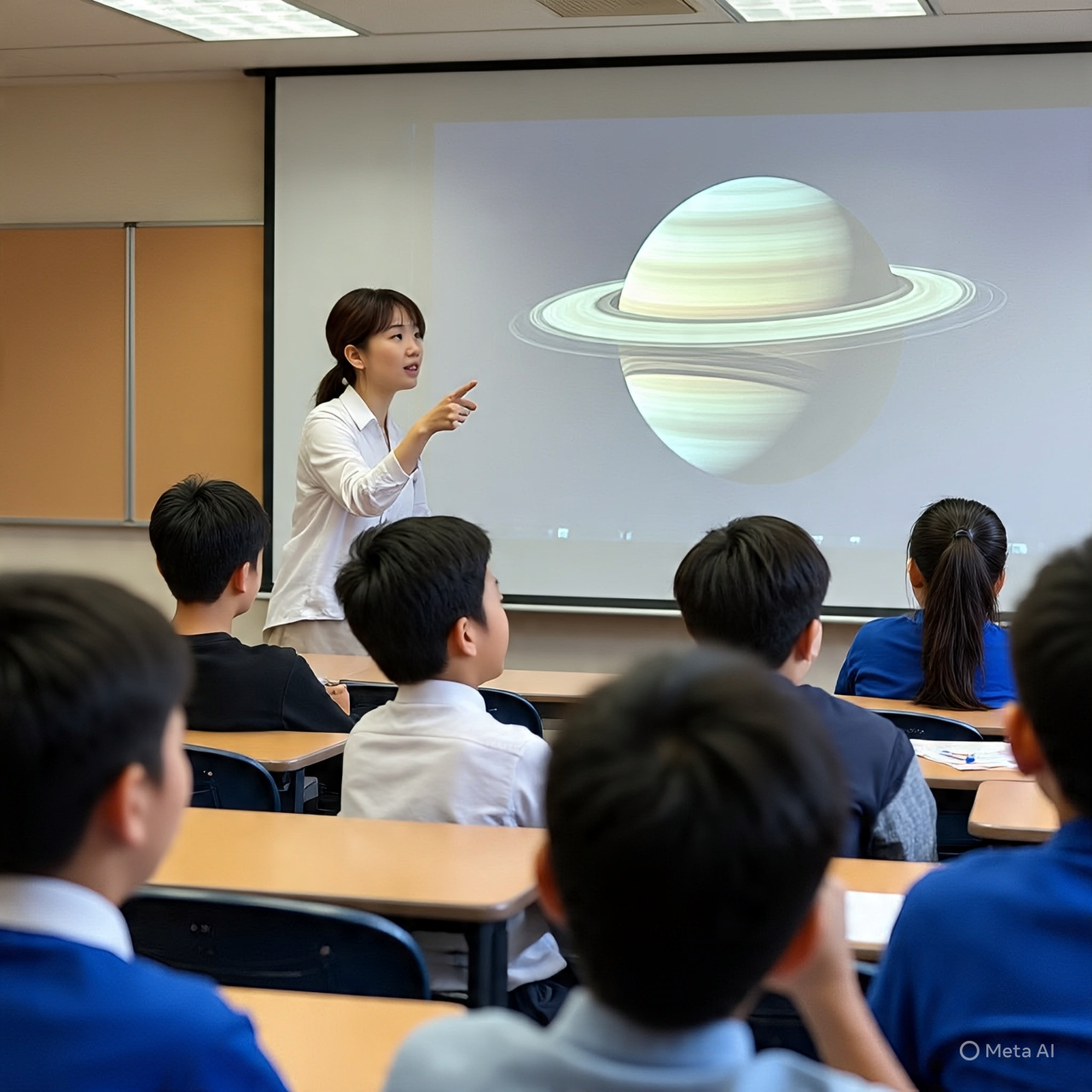
Section A – Listening Exercise – Click on the Image to watch the Video

Teacher to Frame 10 Simple questions based on this video – for listening assessment
Section B – Reading, Comprehension and Writing – Inspired by Bill Gates’ Proposal for a Safer World**
magine a world where a dangerous disease starts spreading again — but this time, we are ready. Hospitals don’t run out of beds, vaccines are quickly developed, and people stay calm because a trained global team is already responding.
Bill Gates, co-founder of Microsoft and a well-known philanthropist, believes that the world can prevent future pandemics if we prepare early. He proposes a program called GERM: Global Epidemic Response and Mobilization. According to Gates, this would work like an international first-response team, similar to how firefighters respond to emergencies before they become disasters.
The GERM team would include around 3,000 full-time experts: epidemiologists, data scientists, public health coordinators, and communication specialists. Their only mission would be to stop outbreaks before they spread worldwide. They would work with the World Health Organisation (WHO) and be stationed in different countries — especially in low-income regions where outbreaks can grow quickly.
These experts would regularly conduct pandemic practice drills, just like fire drills in schools. The goal is simple: detect early, respond fast, and prevent global chaos.
Although Gates’ plan may cost governments one billion dollars a year, he argues that it’s a small price compared to the cost of COVID-19, more than 12.5 trillion dollars. Experts also warn that more pandemics could happen in the future. Gates believes COVID-19 taught the world many lessons — and now is the time to act, not react.
Subject-Wise Questions
WATCH OUT – “2030 Classrooms, No Textbooks, No Teaching Only Technology – Ready for the Unexpected – ” Preparing the Learners for Future Challenges.
AI Teacher Would Play the video and frame the ‘Thinking’ question in all subjects based on the same Video.
1️ English – Comprehension
What is the main purpose of the proposed GERM team?
Why does Bill Gates believe regular drills are necessary?
How does the cost of the GERM project compare to the cost of COVID-19?
2️ English Grammar
Change to passive voice:
Governments will fund the GERM project.
Rewrite in reported speech:
Bill Gates said, “We need a first-response team for pandemics.”
Identify the tense:
“Experts warn that more pandemics could happen.”
3 Civics
Why should international cooperation be important during global health crises?
Which global organisation would guide the GERM team?
How does the GERM proposal reflect the responsibility of governments toward public health?
4 History
Name one past pandemic and describe its global impact.
How might human history be different if pandemic-response teams existed earlier?
Why is learning from past crises important?
5️ Economics
Why might governments spend money on prevention rather than dealing with a crisis later?
How did the COVID-19 pandemic affect the world economy?
If preventing a pandemic costs $1 billion and a pandemic costs $12.5 trillion, which is more economical and why?
6️ Mathematics
Convert 12.5 trillion dollars into billions.
If the GERM team has 3,000 experts, and each country must host 5, how many countries can participate?
If pandemic risk reduces by 40% after implementing GERM, what fraction is this?
7️ Management
What leadership qualities would be essential for running a global emergency team?
Why would communication professionals be important in a pandemic response?
If you were the leader of the GERM team, what would be your first action plan?
#AppliedEducation #SchoolingIn2030 #NewArtOfEducation
Absolutely — here is a clear, teacher-friendly Answer Key + Marking Scheme for the integrated lesson.
📘 Answer Key & Marking Scheme
Total marks may be adjusted based on grade level.
Recommended: 3 marks per question × 21 = 63 marks
(You may round off to 60 marks for assessment.)
✅ 1️⃣ English – Comprehension (3 marks each)
| Question | Expected Answer | Marks |
| 1. Purpose of the GERM team | To prevent future pandemics by detecting outbreaks early and responding immediately. | 3 |
| 2. Why drills are needed | Drills help ensure the team is prepared, efficient, and ready to act quickly in a real outbreak. | 3 |
| 3. Cost comparison | The GERM project costs $1 billion yearly, while COVID-19 cost over $12.5 trillion — meaning prevention is far cheaper than damage. | 3 |
✅ 2️⃣ English – Grammar (3 marks each)
| Task | Correct Answer | Marks |
| 1. Passive voice | The GERM project will be funded by governments. | 3 |
| 2. Reported speech | Bill Gates said that we need a first-response team for pandemics. | 3 |
| 3. Identify tense | Simple present tense (expressing possibility). | 3 |
✅ 3️⃣ Civics (3 marks each)
| Question | Expected Answer | Marks |
| 1. Importance of international cooperation | Pandemics affect the whole world, so countries must work together to share resources, research, and response strategies. | 3 |
| 2. Coordinating organization | The World Health Organization (WHO). | 3 |
| 3. Government responsibility | Protecting citizens’ health, safety, and preparedness through planning and prevention. | 3 |
✅ 4️⃣ History (3 marks each)
| Question | Possible Answer Examples | Marks |
| 1. Example of a past pandemic | Black Death, Spanish Flu, COVID-19 — (brief impact statement required). | 3 |
| 2. How history would change | Early containment could have saved millions of lives and reduced long-term social and economic damage. | 3 |
| 3. Why learn from past crises | To avoid repeating mistakes and improve preparedness and response strategies. | 3 |
✅ 5️⃣ Economics (3 marks each)
| Question | Expected Answer | Marks |
| 1. Why prevention is cheaper | Preventing a crisis reduces financial losses, healthcare strain, deaths, and economic shutdowns. | 3 |
| 2. Effects of COVID-19 on economy | Job losses, business closures, slowed trade, disrupted supply chains, inflation, or recession. | 3 |
| 3. Which is economical and why | Prevention is cheaper because $1B is far less than $12.5T spent on damage control. | 3 |
✅ 6️⃣ Mathematics (3 marks each)
| Question | Correct Solution | Marks |
| 1. Convert trillion to billions | 12.5 trillion = 12,500 billion | 3 |
| 2. Country calculation | 3,000 experts ÷ 5 = 600 countries (or “600 locations”) | 3 |
| 3. Fraction for 40% | 40% = 40/100 = 2/5 | 3 |
✅ 7️⃣ Management (3 marks each)
| Question | Acceptable Answer | Marks |
| 1. Leadership qualities | Decision-making, clear communication, crisis management, coordination, or strategic thinking. | 3 |
| 2. Role of communication professionals | To provide accurate information, prevent fear, reduce misinformation, and guide public behavior. | 3 |
| 3. First action as leader (student opinion, but must be logical) | Example: Create emergency response plans, assign roles, establish communication channels, or conduct training. | 3 |
⭐ Suggested Marking Rubric
| Response Type | Criteria | Marks |
| Full Response | Accurate, complete, clear, and uses relevant terms | Full (3) |
| Partial Response | Partially correct, missing detail or clarity | 1–2 |
| Incorrect/Blank | No valid information | 0 |
🧠 Optional Extension Scoring (If Needed)
- Critical thinking explanations: +1 mark bonus
- Diagrams, tables, or structured reasoning: +1 mark
- Real-world examples: +1 mark
(Max bonus: 5 marks – The Teacahers should used his/her own discretion)
EL NIÑO AWARENESS – Listening Comprehension
Grade 8 (These test can be adminstated till mid-2026)
Time: 30 Minutes
Maximum Marks: 25
Listening Skill – 2 Topic – Elnino, a global problem- Click the Audio Button to Listen
Instructions
- Answer all questions.
- There is no choice.
- Write neatly and clearly.
Section A – Short Answer Questions (2 Marks Each)
Q1.
What is El Niño?
(2 Marks)
Q2.
In which ocean does El Niño mainly occur?
(2 Marks)
Q3.
Mention any two effects of El Niño on weather patterns.
(2 Marks)
Q4.
How can El Niño affect agriculture?
(2 Marks)
Q5.
Why is it important for people to be aware of El Niño events?
(2 Marks)
Section B – Descriptive Questions (5 Marks Each)
Q6.
Explain how El Niño develops. Describe the changes that occur in ocean temperatures and winds.
(5 Marks)
Q7.
Discuss any five impacts of El Niño on people, the environment, and the economy.
(5 Marks)
Section C – Critical Thinking Question (5 Marks)
Q8.
Your region is expected to experience the effects of a strong El Niño event next year. As a student leader, suggest five practical measures that schools, families, and local authorities can take to reduce its impact on water resources, agriculture, and public health.
(5 Marks)
Marking Scheme
Q1.
El Niño is a climate phenomenon in which surface waters of the central and eastern Pacific Ocean become unusually warm.
Q2.
The Pacific Ocean.
Q3.
Any two:
- Droughts
- Floods
- Heat waves
- Changes in rainfall patterns
- Strong storms
Q4.
It can reduce crop yields, cause droughts or floods, and affect food production.
Q5.
Awareness helps communities prepare for weather changes, protect resources, and reduce risks.
Q6. (5 Marks)
Award marks for:
- Explanation of warming ocean waters (2)
- Weakening of trade winds (1)
- Changes in rainfall and weather patterns (1)
- Overall understanding and clarity (1)
Q7. (5 Marks)
Any five valid impacts:
- Drought
- Flooding
- Crop damage
- Water shortages
- Fishery disruptions
- Forest fires
- Health risks
- Economic losses
Q8. (5 Marks)
Award 1 mark each for any five practical measures such as:
- Water conservation
- Rainwater harvesting
- Drought-resistant crops
- Public awareness campaigns
- Emergency planning
- Improved irrigation
- Health and sanitation measures
- Monitoring weather forecasts
End of the Questions